
Business Loan Finance Online :: News
SHARE

Share this news item!

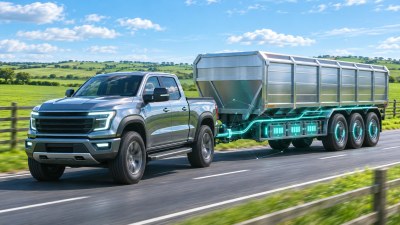
Electric Trailers Turn Fuel Savings Into a Capital Planning Question

New freight technology may interest agriculture, but upfront cost, range and infrastructure still matter

Electric Trailers Turn Fuel Savings Into a Capital Planning Question?w=400

The information on this website is general in nature and does not take into account your objectives, financial situation, or needs. Consider seeking personal advice from a licensed adviser before acting on any information.

ABC Landline reporting on 14 November 2026 has highlighted a South Australian push to commercialise battery-powered trailers that could reduce diesel use in heavy transport without requiring operators to replace prime movers.
For Australian farm businesses, the development is worth watching because freight, haulage and on-farm logistics are increasingly part of the same machinery and cash-flow conversation as tractors, headers, loaders and irrigation assets.

The technology profiled by ABC centres on electric trailers being developed by VE Motion at Murray Bridge, with agriculture among the early sources of interest. The company’s founders are targeting a large diesel reduction, although one early customer, a Goulburn livestock farmer and civil construction operator, indicated a more conservative saving would still be useful. That distinction matters: for finance planning, projected fuel savings need to be treated as assumptions to be tested, not guaranteed offsets against repayments.

The appeal is easy to understand. Diesel prices have been a major pressure point for broadacre growers, livestock producers, contractors and regional freight operators. A trailer that contributes power to the haulage task could, in theory, reduce running costs on repeat routes such as milk collection, grain movements, livestock transport, bulk wine, mushroom production or forestry haulage. However, ABC’s reporting also underlined the practical constraints: road approvals, battery weight, charging access, network charges, payload considerations and a reported price range of about $200,000 to $400,000.

That makes the issue less about novelty and more about disciplined capital allocation. Farm businesses considering emerging transport equipment may want to compare several scenarios, including keeping diesel equipment longer, buying conventional replacement gear, trialling electric support equipment, or waiting until infrastructure and resale evidence become clearer. Educational tools for modelling farm equipment finance scenarios can help illustrate how deposit size, trade-in value, term length and balloon assumptions may affect estimated cash flow, although calculator outputs remain general estimates rather than quotes or approvals.

Seasonality also matters. A fuel-saving asset may look attractive on paper, but the repayment pattern has to be considered alongside harvest receipts, livestock sale timing, contract income and quieter months. General information on seasonal repayments may help frame the trade-offs, particularly where income is uneven and where an asset is used intensively for only part of the year.

The broader message for farm machinery finance is that energy transition decisions are no longer confined to paddock equipment. As electric trailers, converted trucks and alternative fuels move from trials into commercial discussion, farmers may need to assess machinery, freight and energy infrastructure together. The opportunity may be real, but so are the uncertainties, and early adoption will suit some operations better than others.

Published:Thursday, 26th Nov 2026
Author: Paige Estritori

Please Note: We do not endorse any specific products or companies. Some content is sourced from third parties, including press releases, and may not be independently verified for accuracy or completeness.

Share this news item:

Rate this article

0 Comments

No comments yet. Be the first to share your thoughts.

Finance News

Cattle Levy Rise Gives Producers a New Cost to Plan For
26 Nov 2026: Paige Estritori
Grass-fed cattle producers have narrowly backed an increase in the national cattle transaction levy, turning an industry governance debate into a practical budgeting issue for livestock businesses. The vote, reported after Meat & Livestock Australia’s annual meeting in Townsville, approved lifting the levy from $5 to $6 per grass-fed animal sold, with the higher rate expected to begin from 1 July 2028 if linked transparency and reporting reforms are in place. - read more
Autonomous machinery survey puts cost hurdles back in view
26 Nov 2026: Paige Estritori
A fresh national survey of Australian grain growers is putting autonomous machinery back on the finance agenda, not because every farm is ready to buy driverless equipment, but because the gap between interest and affordable adoption is becoming harder to ignore. - read more
Electric Trailers Turn Fuel Savings Into a Capital Planning Question
26 Nov 2026: Paige Estritori
ABC Landline reporting on 14 November 2026 has highlighted a South Australian push to commercialise battery-powered trailers that could reduce diesel use in heavy transport without requiring operators to replace prime movers. For Australian farm businesses, the development is worth watching because freight, haulage and on-farm logistics are increasingly part of the same machinery and cash-flow conversation as tractors, headers, loaders and irrigation assets. - read more
Mortgage hardship help can change the refinance picture
26 Nov 2026: Paige Estritori
Fresh reporting on mortgage stress has put a practical but often misunderstood issue back in front of Australian homeowners: asking a lender for hardship assistance can be the right step when repayments become unmanageable, but it may also change the way a future refinance is viewed. With higher variable rates flowing through household budgets after the Reserve Bank’s November move, the distinction between short-term repayment relief and longer-term borrowing flexibility is becoming more important. - read more


Business Loans Articles

Understanding Lenders: What They Look for in Your Loan Application
Applying for a small business loan can feel overwhelming, but with the right preparation, you can improve your chances of success significantly. Understanding what lenders look for in a loan application is crucial to making your business stand out. - read more
Business Loan Eligibility and Documents Checklist for Australian Businesses
Before applying for business finance, Australian businesses can save time by checking common eligibility factors and preparing the documents lenders usually request. This checklist explains what lenders may review, what paperwork to gather and how to present your application clearly. - read more
How to Craft a Winning Pitch to Attract Investors
Creating a compelling pitch is crucial for any entrepreneur seeking to attract investors. It's more than just presenting numbers and forecasts; it's about connecting on a human level and conveying your vision effectively. - read more
Business Loan Costs in Australia: Interest, Fees and Repayment Factors Explained
Business loan costs can include more than the advertised interest rate. Learn how interest, fees, loan term, repayment frequency and facility structure can affect total repayments in Australia. - read more

Business Loan Repayment Calculator

Business Loan Repayment Calculator

The Great Australian Side-Hustle

The Great Australian Side-Hustle

Stay informed with MoneyTips

Get practical financial information, news, guides and resources.


Knowledgebase
Liquidity:
The ease with which an asset or security can be converted into cash without affecting its market price.