The information on this website is general in nature and does not take into account your objectives, financial situation, or needs. Consider seeking personal advice from a licensed adviser before acting on any information.
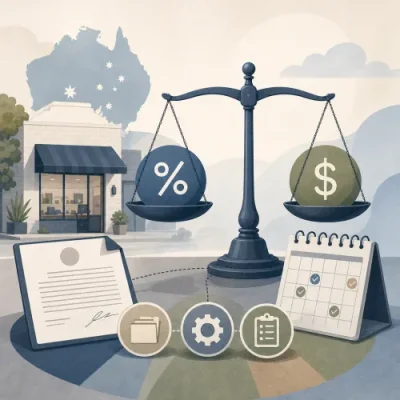
Business loan costs can include more than the advertised interest rate. Learn how interest, fees, loan term, repayment frequency and facility structure can affect total repayments in Australia.
Understanding business loan costs is an important step before applying for finance. The interest rate matters, but it is only one part of the total amount your business may pay over the life of a loan or credit facility.
In Australia, business finance costs can vary widely depending on the lender, loan type, security offered, trading history, repayment structure and your business's overall risk profile. This guide explains the main cost factors to consider so you can assess affordability more clearly before comparing options or requesting a finance assessment through Business Loan Finance Online.
What makes up the total cost of a business loan?
The total cost of a business loan is generally the amount you repay above the amount borrowed, plus any relevant fees, charges and costs connected to the facility. Depending on the product, that may include:
- Interest charged on the loan balance or facility use
- Application, establishment or documentation fees
- Ongoing monthly, annual or account management fees
- Security-related costs, such as valuation, registration or legal fees
- Early repayment, break or exit costs, where applicable
- Late payment, dishonour or default fees if repayments are missed
- Line fees or unused facility fees for some revolving credit products
Not every business loan includes every type of fee. Some facilities may have a higher interest rate but fewer upfront charges, while others may offer a lower rate with additional costs. This is why affordability should be assessed using the whole repayment structure, not the rate alone.
Business loan interest rates: the biggest visible cost factor
Business loan interest rates are usually the most visible cost of finance. Interest is the amount charged by the lender for providing funds, and it may be calculated daily, monthly or according to the lender's product terms.
Interest rates for Australian business loans can be influenced by factors such as:
- Loan type: A term loan, line of credit, equipment finance facility, invoice finance facility or overdraft may each be priced differently.
- Security: Loans secured by property, vehicles, equipment or other assets may be priced differently from unsecured business loans.
- Business performance: Revenue, cash flow stability, profitability and debt levels can affect lender assessment.
- Trading history: Established businesses with consistent records may be assessed differently from newer businesses.
- Credit profile: Business and director credit history can influence pricing and available options.
- Industry and purpose: Some sectors, purposes or repayment sources may be viewed as higher or lower risk by lenders.
- Loan amount and term: The size and duration of the facility can affect the lender's pricing and conditions.
Rates may be fixed, variable or structured in another way depending on the product. If you want to understand rate structure in more detail, see our guide to fixed versus variable interest rates in Australia.
Business loan fees to check before applying
Business loan fees can significantly affect the total cost of borrowing, especially for smaller or shorter-term loans where upfront fees are spread over a shorter repayment period.
Common fees and charges to review include:
| Fee or charge |
What it may relate to |
Why it matters |
| Application or establishment fee |
Setting up the loan or assessing the application |
Can increase upfront borrowing costs even before repayments begin |
| Ongoing account fee |
Monthly or annual administration of the facility |
Adds to the total cost over the loan term |
| Valuation or security fee |
Assessing or registering assets used as security |
May apply to secured business finance |
| Legal or documentation costs |
Preparing or reviewing facility documents |
May be relevant for more complex commercial loans |
| Early repayment or break cost |
Repaying early, refinancing or changing a fixed arrangement |
Can reduce the benefit of paying out a facility early |
| Late payment or dishonour fee |
Missed or failed repayments |
Can increase costs and may affect future borrowing capacity |
| Line fee or unused facility fee |
Access to a credit limit, whether used or not |
Relevant for overdrafts, revolving credit and some lines of credit |
Ask for fees to be explained clearly before accepting any facility. Lender, broker and third-party costs can differ, and some fees may be negotiable while others may not be.
Loan term: lower repayments can still mean higher total interest
The loan term is the period over which you repay the borrowed amount. A longer term may reduce regular repayments because the amount is spread over more time. However, it may also increase total interest paid if the balance remains outstanding for longer.
A shorter term may reduce total interest but increase each repayment. That can place pressure on cash flow if revenue is seasonal, customers pay slowly or the business has other large expenses due at the same time.
When comparing loan terms, consider both:
- Repayment affordability: Can the business manage the regular repayment without disrupting operations?
- Total repayment cost: How much will the business pay overall if the loan runs for the full term?
For many businesses, the right term is not simply the shortest or longest available. It is the term that aligns with cash flow, the purpose of the finance and the expected benefit from using the funds.
Repayment frequency and structure can change cash flow impact
Loan repayments may be weekly, fortnightly, monthly or structured in another way depending on the lender and product. More frequent repayments may reduce the balance faster in some loan structures, but they can also require tighter cash flow management.
The repayment structure also matters. Some facilities involve principal and interest repayments, where each payment reduces the loan balance over time. Others may allow interest-only periods, seasonal repayment structures or drawdown-based repayments. These structures can be useful in some situations, but they may also increase total interest if principal reduction is delayed.
Before choosing a repayment structure, ask:
- Are repayments aligned with how and when the business receives income?
- Does the repayment schedule leave enough room for wages, suppliers, tax obligations and stock purchases?
- Will repayments still be manageable if revenue drops temporarily?
- Does the structure reduce the debt over time, or mainly cover interest?
Secured and unsecured business finance costs
Security is one of the major factors that can affect business finance costs. A secured loan uses an asset as security for the lender. This may include property, vehicles, equipment or other acceptable assets. An unsecured business loan does not rely on a specific asset in the same way, although directors may still be asked to provide guarantees or meet other lender requirements.
Secured business loans may have different pricing because the lender has additional protection if the borrower defaults. However, they can also involve extra costs such as valuations, registrations or legal documentation. Unsecured business loans may be faster or simpler in some cases, but they may carry higher rates or stricter eligibility criteria depending on the lender and borrower profile.
The lower-cost option is not always obvious from the headline rate. Consider the full set of costs, the risk to business or personal assets, the repayment obligations and what happens if the business cannot meet repayments.
Facility type: term loans, lines of credit and other options
The type of finance you choose can change both the cost and the way repayments work.
- Term loans: Usually provide a lump sum that is repaid over an agreed term. Costs may be easier to estimate if the rate and repayment schedule are clear.
- Business lines of credit: Provide access to funds up to an approved limit. Interest may apply to funds used, while line or facility fees may also apply.
- Equipment finance: Used to purchase vehicles, machinery or equipment. The asset being financed may form part of the security arrangement.
- Invoice finance: Uses unpaid invoices to support cash flow. Costs may depend on invoice values, payment timing and facility structure.
- Merchant cash advance or revenue-based finance: Repayments may be linked to sales or turnover, but costs and repayment mechanics should be reviewed carefully.
Different facilities suit different business needs. A short-term working capital gap, a long-term expansion project and an equipment purchase may each require a different cost comparison.
Why advertised rates do not always show the full cost
Advertised rates can be useful as a starting point, but they may not represent the rate your business is offered. They may also exclude fees, security costs, lender conditions or the effect of repayment structure.
Business lending is often assessed case by case. A lender may review financial statements, bank statements, ATO obligations, business activity statements, asset positions, cash flow and director information before confirming pricing and terms.
When reviewing advertised rates or indicative offers, check whether:
- The rate is fixed, variable or indicative only
- Fees are included or excluded
- The quote assumes security or a director guarantee
- The repayment frequency is clearly stated
- The total amount repayable is provided
- Early repayment or exit costs may apply
For business lending, do not rely only on a headline rate or a simple comparison table. Ask for the assumptions behind any repayment estimate.
Using calculators to estimate loan affordability
A calculator can help you explore borrowing scenarios before applying. It can show how changes to the loan amount, interest rate, term or repayment frequency may affect repayments.
You can use the available business loan calculator as a starting point for repayment estimates. Calculator results are indicative only and depend on the details entered. They may not include all lender fees, taxes, security costs or product-specific charges.
When using a calculator, test more than one scenario. For example, you might compare:
- A shorter term versus a longer term
- A higher interest rate scenario to allow for pricing changes or risk-based assessment
- Weekly versus monthly repayment timing, if available
- The repayment effect of borrowing slightly less or slightly more
This can help you identify whether the loan is likely to remain affordable under different conditions.
Questions to ask before accepting a business loan offer
Before accepting a business loan, it is worth asking direct questions about the total cost and how the facility works. Useful questions include:
- What is the total amount repayable if the loan runs for the full term?
- What fees are payable upfront, during the loan and at exit?
- Is the interest rate fixed, variable or subject to review?
- What happens if the business repays early?
- Are there costs if repayments are missed or dishonoured?
- Is security required, and what assets or guarantees are involved?
- Can the repayment schedule be matched to business cash flow?
- Are there restrictions on how the funds can be used?
If you are comparing multiple lenders, a broker may be able to help explain how fees, terms and lender criteria differ. You can learn more about the role of broker referral partners through the brokers page.
Tax and accounting considerations
Some business borrowing costs may have tax or accounting implications, but treatment can depend on the purpose of the loan, the type of fee, the business structure and how the funds are used. Interest and fees should not be assumed to be deductible without checking your specific circumstances.
Speak with a registered tax agent or accountant before relying on tax treatment in your affordability calculations. A loan that appears affordable before tax and accounting considerations may have a different cash flow impact once timing, deductions and reporting obligations are considered.
How to compare business loan costs fairly
To compare business loan costs more accurately, try to compare like with like. That means looking beyond the rate and reviewing the full offer structure.
- Start with the loan purpose. Match the facility to the need, such as working capital, equipment, expansion or invoice funding.
- Compare the same loan amount and term. Different terms can make repayments look more or less affordable.
- List all fees. Include upfront, ongoing, security-related and exit costs where known.
- Check repayment timing. Weekly repayments can feel very different from monthly repayments in day-to-day cash flow.
- Review flexibility. Redraw, extra repayments, early payout and top-up options may affect long-term value.
- Consider risk. Security, guarantees and default consequences should be part of the cost assessment.
A loan with a slightly higher rate may still be more suitable for some businesses if it offers better flexibility, clearer fees or a repayment schedule that better matches cash flow. However, suitability depends on your business's circumstances and the lender's criteria.
The bottom line on business loan costs
The total cost of a business loan in Australia depends on more than the advertised interest rate. Fees, loan term, repayment frequency, security, facility type and lender assessment criteria can all affect what your business ultimately pays.
Before applying, estimate repayments, review all fees, stress-test affordability and ask how the loan structure fits your business cash flow. General information can help you prepare, but final pricing, eligibility and loan terms will depend on your circumstances and the lender's assessment.
Published: Wednesday, 26th Aug 2026
Author: Paige Estritori




No comments yet. Be the first to share your thoughts.