
Business Loan Finance Online :: News
SHARE

Share this news item!

Robotic dairy example puts connected equipment costs in focus

Virtual fencing and milking automation highlight cash-flow, welfare and support questions for dairy farms

Robotic dairy example puts connected equipment costs in focus?w=400

The information on this website is general in nature and does not take into account your objectives, financial situation, or needs. Consider seeking personal advice from a licensed adviser before acting on any information.

ABC Rural reporting from Tasmania has put a fresh spotlight on how quickly dairy equipment decisions are moving from single-machine purchases to connected operating systems.
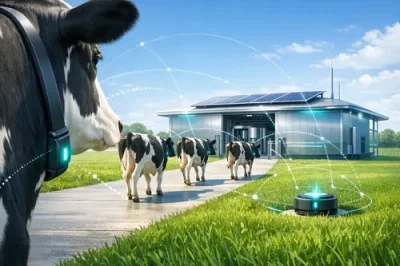
A north-west Tasmanian dairy farm has been profiled as Australia’s first to combine GPS-enabled virtual fencing collars with robotic milking, using animal data, automated movement and milking hardware to reduce the amount of hands-on labour needed to bring cows through the dairy.

The reported system uses collars to help guide cows through virtual boundaries towards the milking area, while robotic milkers identify animals and decide whether they are ready to be milked. The story is not simply about a new gadget. It points to a broader capital-planning issue for dairy and livestock businesses: the next equipment upgrade may involve collars, sensors, software, connectivity, gates, yards, backup processes, training and servicing obligations, rather than one clearly defined asset.

For farm equipment finance planning, that matters because the cost and risk profile can look different from a conventional tractor, vat or yard upgrade. A robotic dairy system may promise labour efficiencies and more flexible management, but the finance assessment also needs to consider downtime risk, repair access, subscription or platform costs, data reliability, animal training periods and whether existing infrastructure can support the technology. Using an estimation tool such as the Farm Equipment Finance Calculator can be useful for comparing indicative repayment scenarios, but connected systems usually need a wider budget than the headline equipment price.

Key questions for producers considering similar technology include:

  • whether the expected labour saving is recurring, measurable and realistic for the herd size;
  • how software, collar replacement, service contracts and connectivity costs are treated in the budget;
  • whether finance terms align with the useful life of the hardware and the pace of technology change;
  • how animal welfare requirements, training and monitoring will be managed under state rules; and
  • what backup arrangements apply if robots, collars, power or data connections fail.

The Tasmanian example also shows why general enthusiasm for automation needs to be balanced with caution. Researchers cited in the reporting noted that more work is needed on how virtual fencing interacts with autonomous, cow-driven dairy systems, particularly where animals are moved as a mob rather than choosing milking times individually. Regulatory settings for virtual fencing also vary by jurisdiction and approved systems, so compliance cannot be assumed nationally.

From a finance perspective, the strongest lesson is that automation should be assessed as an operating model, not just a machinery purchase. Where income remains milk-price and season dependent, seasonal repayments, working-capital reserves and conservative downtime assumptions may all deserve attention before a farm commits major capital to connected dairy technology.

Published:Thursday, 5th Nov 2026
Author: Paige Estritori

Please Note: We do not endorse any specific products or companies. Some content is sourced from third parties, including press releases, and may not be independently verified for accuracy or completeness.

Share this news item:

Rate this article

0 Comments

No comments yet. Be the first to share your thoughts.

Finance News

Melbourne Boat Show Crowds Put Boat Budgets Back on the Table
10 Nov 2026: Paige Estritori
The 64th Melbourne Boat Show has given Australia’s boating market another useful demand signal, with organisers reporting more than 42,000 visitors at Docklands from 15 to 18 October 2026. The result was stronger than last year’s reported 39,000 attendance and came after four days of favourable weather, free entry and a waterfront layout spanning more than a kilometre of marina and land-based displays. - read more
New FLEETLEAP Alliance Targets Diesel Costs and EV Uncertainty
10 Nov 2026: Paige Estritori
A new Australian freight alliance, FLEETLEAP, has been launched to help truck operators make more informed decisions about fuel efficiency, emissions reduction and electric truck investment. Announced at the NatRoad National Conference on the Gold Coast on 6 November 2026, the project brings together transport associations, energy specialists, insurers and technology providers at a time when operating costs and technology choices are putting extra pressure on fleet planning. - read more
Higher cash rate raises the bar for business borrowing
10 Nov 2026: Paige Estritori
The Reserve Bank of Australia’s 3 November 2026 decision to lift the cash rate target by 25 basis points to 4.85 per cent has put borrowing costs back at the centre of small business planning. For Australian SMEs, the practical issue is not only whether rates rise on an existing facility, but whether budgets, pricing, stock decisions and expansion plans still work under a higher interest-rate path. - read more
Variable Rate Hikes Are Now Landing in Mortgage Budgets
10 Nov 2026: Paige Estritori
Australian mortgage holders are moving from rate speculation to repayment reality after the Reserve Bank of Australia lifted the cash rate target by 25 basis points to 4.85 per cent on 3 November 2026, with major and smaller lenders now passing through increases to variable home loan customers. - read more


Business Loans Articles

Funding for Australian Startups: Exploring Your Options
Whether you're a budding entrepreneur or an established business owner, understanding your funding options is crucial in turning your innovative ideas into reality. The path to securing the right financial support can be both thrilling and challenging, making informed decisions a critical part of your success story. - read more
Understanding Lenders: What They Look for in Your Loan Application
Applying for a small business loan can feel overwhelming, but with the right preparation, you can improve your chances of success significantly. Understanding what lenders look for in a loan application is crucial to making your business stand out. - read more
Business Loan Eligibility and Documents Checklist for Australian Businesses
Before applying for business finance, Australian businesses can save time by checking common eligibility factors and preparing the documents lenders usually request. This checklist explains what lenders may review, what paperwork to gather and how to present your application clearly. - read more
How to Prepare Your Small Business for a Successful Loan Application
When it comes to preparing your small business for a loan application, understanding the intricacies can make a significant difference. A well-prepared application not only boosts your chances of approval but also sets you on a path to financial success. - read more

Business Loan Repayment Calculator

Business Loan Repayment Calculator

The Great Australian Side-Hustle

The Great Australian Side-Hustle

Stay informed with MoneyTips

Get practical financial information, news, guides and resources.


Knowledgebase
Loan Application Fees:
Fees that are charged to cover or partially cover the lender's internal costs of setting up a loan approval for a home buyer.